Coil Turnstile Design: Slitting to Packing
Designing a coil turnstile between a slitting line and the packing line? Define the incoming coil pattern, release control, identity handling, downstream handoff, and buffer sizing — not just the position count.
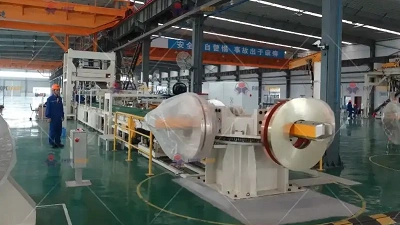
Coil Turnstile Design: From Slitting Line to Packing Line
Coil Turnstile Design: From Slitting Line to Packing Line
A turnstile is easy to underestimate because it is not the wrapping station and it does not look like the final packaging step. In many slit-coil projects, however, the turnstile decides whether the line feeds coils one by one with clear identity and controlled spacing, or whether the rest of the automation spends its time recovering from mixed, blocked, or poorly released coils.
This guide focuses on the design questions that connect a slitting line turnstile to the downstream automatic coil packing line.
Define the Incoming Coil Condition
Turnstile design starts with the product as it really arrives from slitting, recoiling, or bundle handling. Record:
- Coil width and weight distribution
- Number of coils released together
- Orientation on arrival
- Edge and surface sensitivity
- Whether coils are individual or grouped by order or batch
The turnstile should be specified against those real arrival patterns, not an idealized single-coil flow.
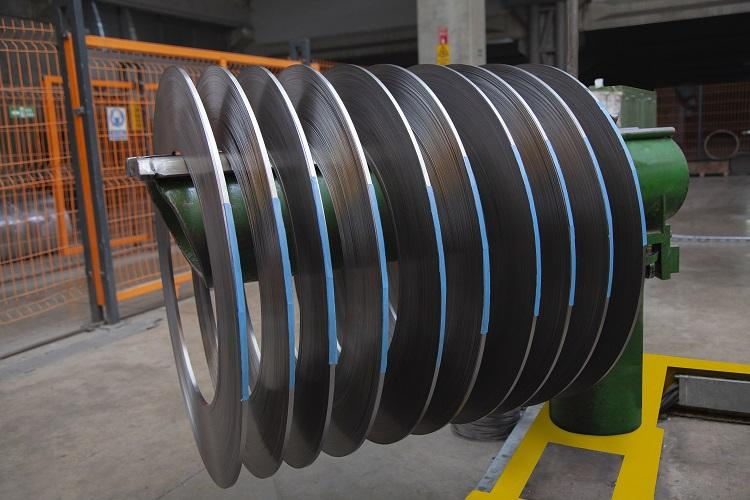
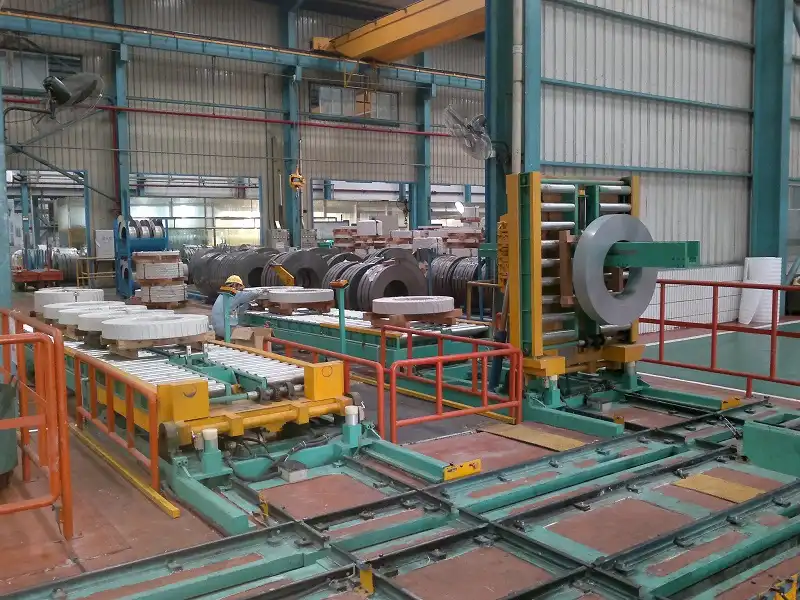
The image shows cold-rolled slitted coils. The turnstile has to be specified against how these coils actually arrive: width, weight, edge condition, and the grouped release pattern from slitting.
Clarify the Job of the Turnstile
In one project, the turnstile mainly acts as a temporary buffer and separator. In another, it also creates order, supports identification, or provides a controlled feed to a down-ender or wrapper. If the job is not stated clearly, the turnstile becomes a generic storage device and its real interface problems are left to downstream equipment.
Write the job in process terms:
- Receive grouped coils
- Hold them without damaging edges
- Release one coil at a time
- Present the coil in the required orientation and spacing
- Support normal recovery when a downstream station stops
Protect Coil Identity Through Separation
In slit-coil lines, one of the hardest tasks is keeping each coil's identity intact after a bunch is separated. The turnstile design should define when the coil identity is confirmed, how it stays linked to the physical coil during release, and what happens when the data record is incomplete or mismatched.
If the mechanical sequence is clear but the identity sequence is not, the line is only partially designed.
Identity control also influences labeling, downstream routing, and exception handling. A turnstile that separates coils successfully but allows a mixed identity condition to travel forward will shift the project risk to later stations instead of removing it.
Control Release, Not Only Storage
Teams often concentrate on how many positions the turnstile has. Capacity matters, but release control matters more. The interface should state:
- What signal allows the next coil to release
- How the line confirms the current coil has cleared the position
- What happens when the next station is unavailable
- Whether the turnstile may reject or hold a coil intentionally
Release logic is where buffering becomes an engineered interface rather than a pile-up area.
Watch a coil car with turnstile for slitting coil line handling and packing:

Match the Downstream Transfer
The turnstile does not succeed on its own. It has to present the coil in a condition that the next station can accept repeatedly. That may be a transfer cart, conveyor, down-ender, centering station, or manual check point. Height, position, orientation, spacing, and ready-state signals all belong to the interface definition.
Do not allow the turnstile to "work" only because an operator manually corrects the last 100 millimeters of alignment.

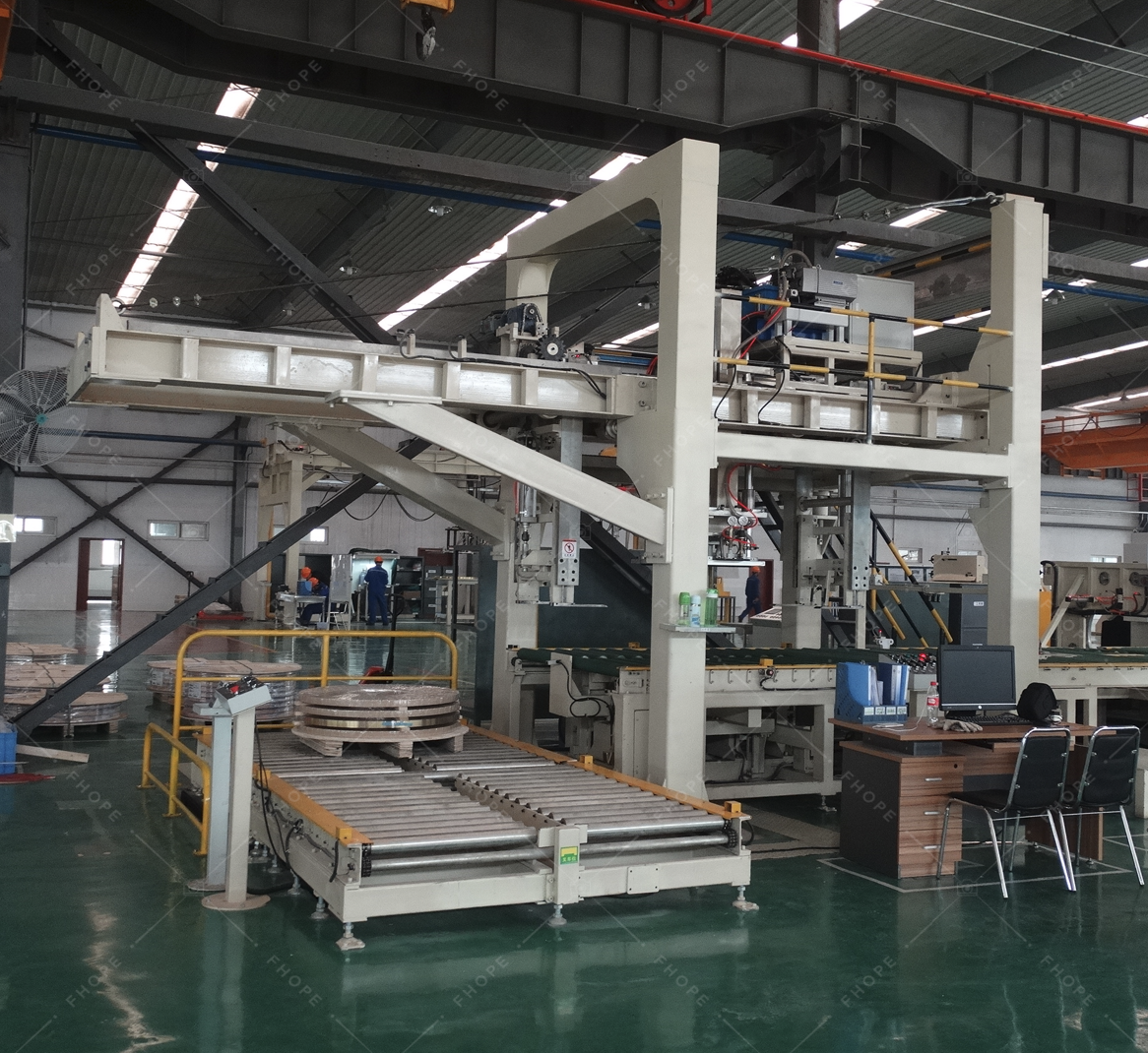
The image shows a vertical coil packaging line. The turnstile has to present each coil to this downstream line at the correct height, position, orientation, and spacing so the transfer does not depend on manual correction.
Size the Buffer Around Real Interruptions
Turnstile capacity should be reviewed against the actual release pattern from slitting and the actual stop pattern downstream. If the downstream line pauses for material replenishment, first-article confirmation, or recovery, the turnstile should support that interruption in a controlled way. If it cannot, the project should say where the extra coils go and who controls them.
This keeps the buffer function tied to the real operating rhythm rather than a nominal position count.
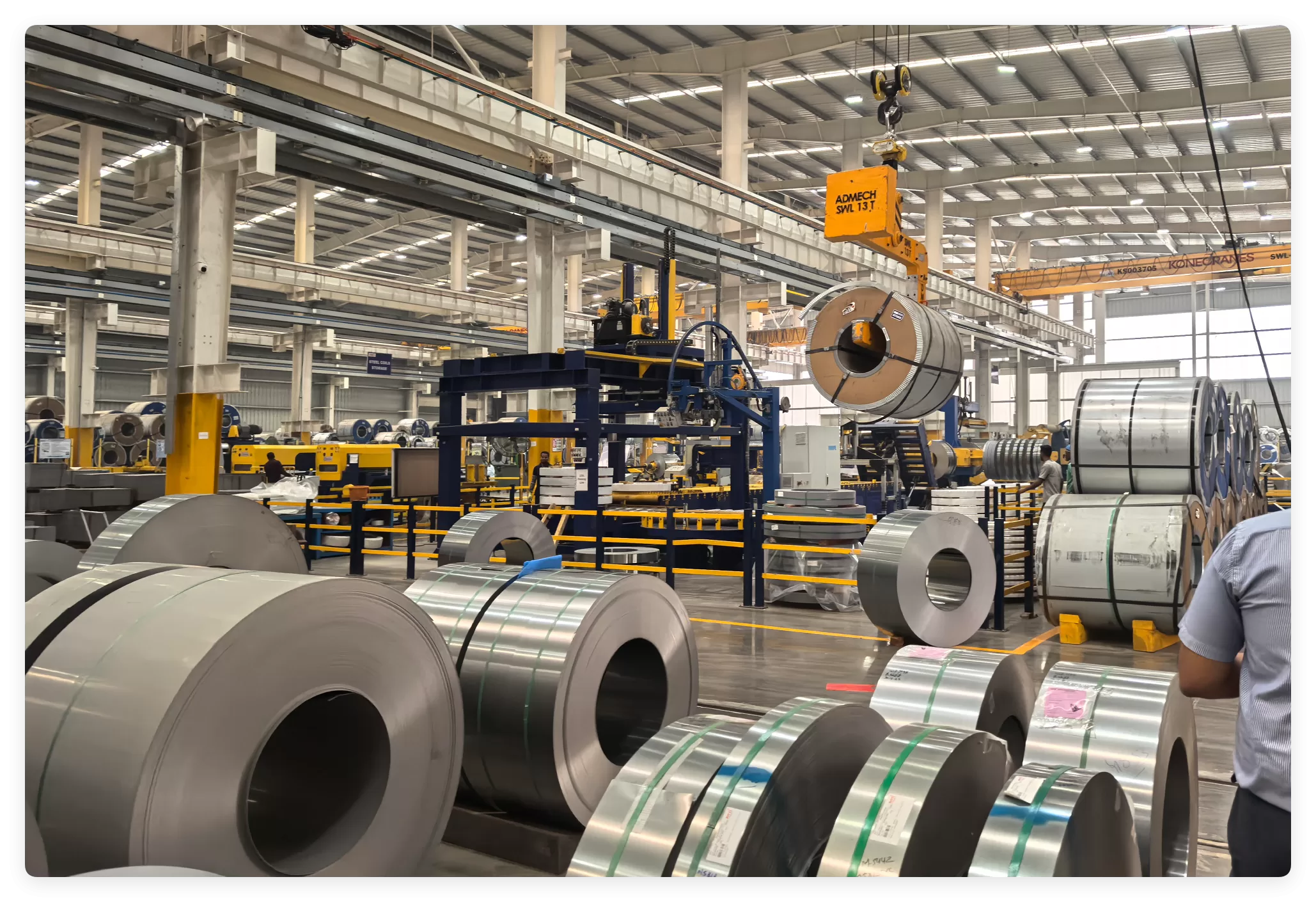
The image shows coil packaging automation in a steel service center. Buffer sizing has to reflect real downstream stop patterns such as material replenishment, first-article checks, and recovery, not only a position count.
Include Recovery and Blocked-Coil Logic
Coils can arrive out of position, show surface concerns, lack a valid identifier, or fail to release correctly. The design should define where those coils wait, who intervenes, what safe state is required, and how the system returns to normal flow afterward.
This protects the rest of the packing line from using the turnstile as an uncontrolled exception zone.
Test the Narrow and Difficult Cases
Acceptance should include more than an average slit coil. Test the smallest stable coil family, the heaviest approved family, the most edge-sensitive case, and the combinations that create the highest release or separation risk. If the project includes bunch handling, test the full bunch and the last coil in the sequence.
The evidence should show controlled feeding into the next process, not only successful mechanical rotation.
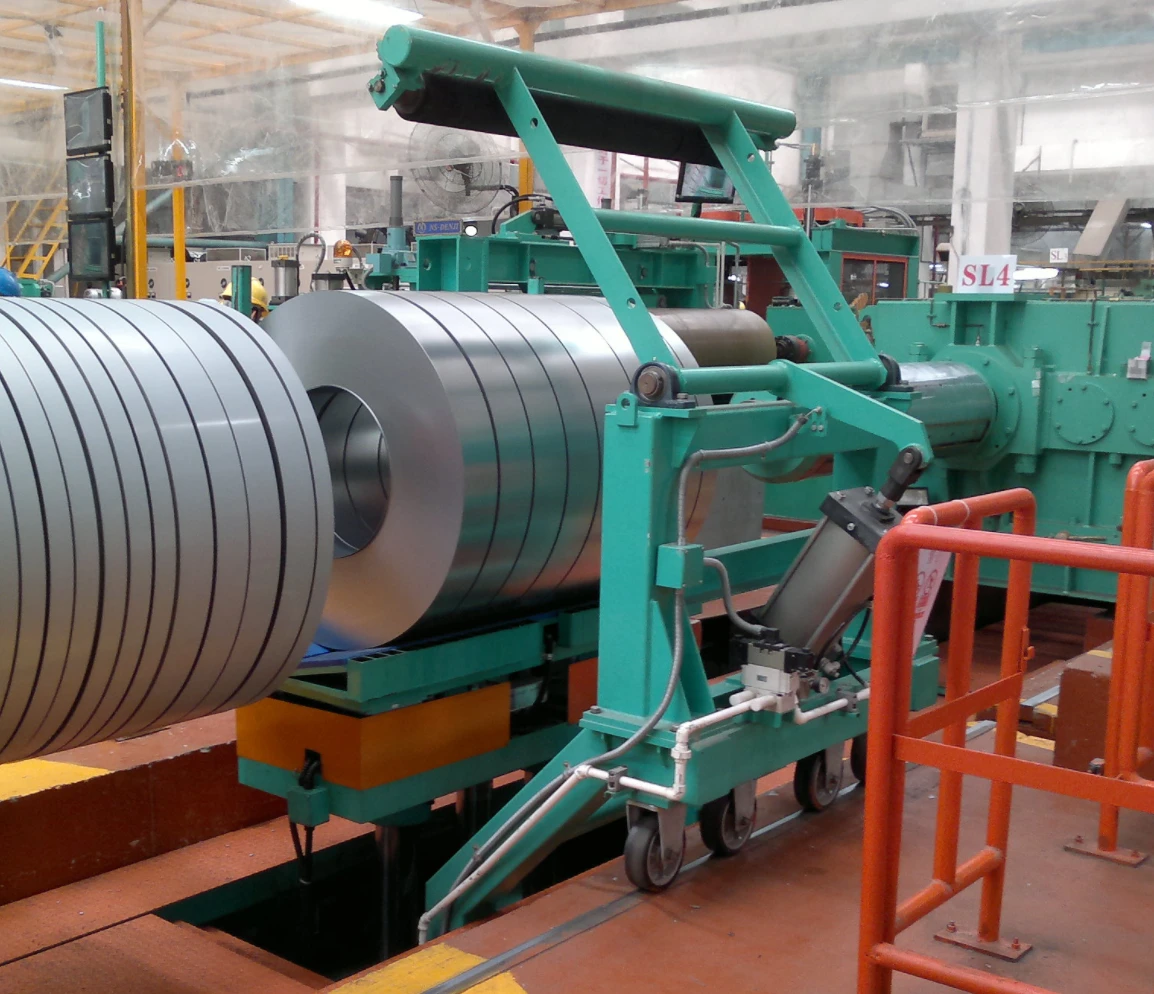
The image shows a steel coil packaging process. Acceptance evidence should show controlled feeding into this process for the narrow and difficult coil cases, not only that the turnstile rotates successfully.
A Practical Next Step
Document the turnstile as a feed-and-separation interface between slitting and packing: incoming bunch pattern, release rule, identity handling, downstream handoff, blocked-coil route, and acceptance cases. Review that interface before finalizing the downstream automatic coil packing line layout.
That review is most effective when operations, automation, and packaging all use the same sketch and the same product examples. The turnstile should then be judged by how well it supports the full slit-coil flow, not only by whether it stores several coils.
Visual Details
Click to enlarge

Click to enlarge

Click to enlarge
Click to enlarge
Watch How It Works
Discover how our automated packaging solutions optimize your production line efficiency. This video demonstrates the seamless operation designed for maximum protection.
Trusted by Steel Mills & Industry Leaders
Global manufacturers rely on FHOPE heavy duty packaging equipment


Ready to optimize your packaging line?
Get a custom quote with ROI analysis. Our engineers respond within 24 hours.
- Free layout design
- Global installation support
- 2-year warranty included
Your information is secure and will never be shared.
Related Machines
Steel Coil Packaging line
View Details →
Vertical coil packaging line
View Details →
Hose Coil Packaging line
View Details →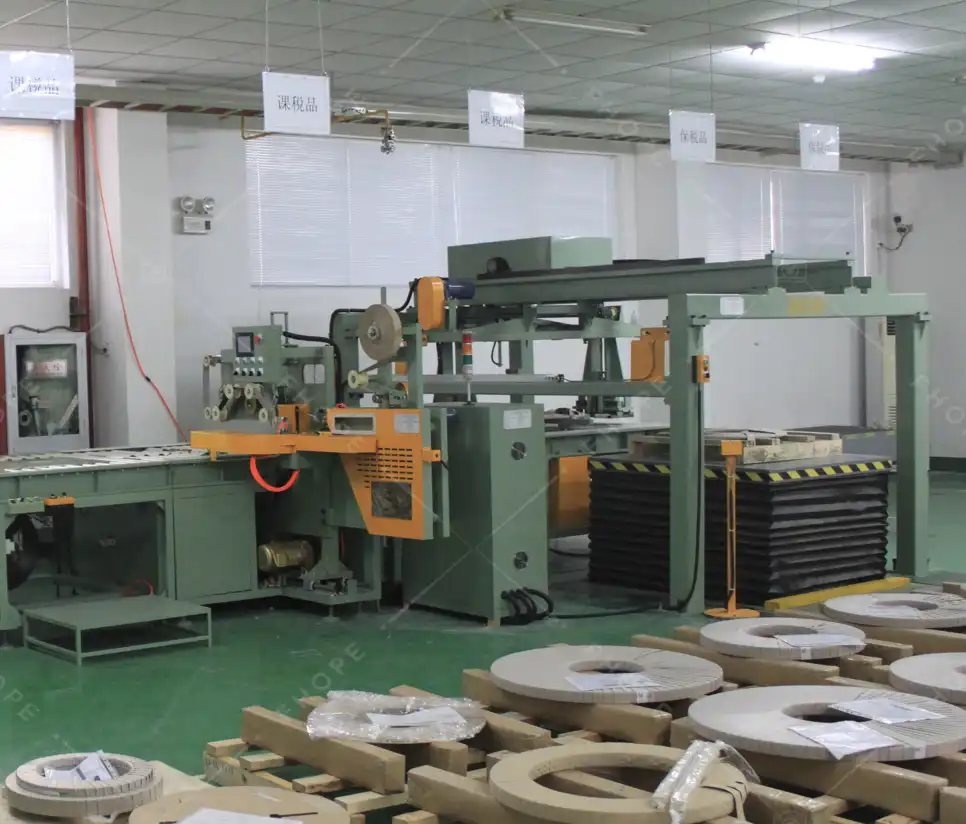
Copper Coil Packaging line
View Details →
Wire Coil Packaging line
View Details →
Panel Packaging line
View Details →
Pipe Bagging Machine
View Details →
Aluminum profile packing line
View Details →
FHOPE Automatic pipe tube bundling&strapping line
View Details →
Automatic pipe tube bundling & strapping line
View Details →
Automatic steel tube strapping machine
View Details →
FHOPE Automatic steel tube packing machine
View Details →
Automatic plastic Pipe strapping packing line
View Details →
Automatic PPR/PVC Pipe bagging line
View Details →
Platsic pipe bag packing machine
View Details →
Tyre Packing Machine FPT-200
View Details →
Tyre Packing Machine FPT-300
View Details →
Tyre Packing Machine FPT-400
View Details →
Cable Coil Packing Machine-FPCA100
View Details →