Coil Packing Line Site Preparation Checklist
Most commissioning delays come from skipped site preparation, not machine defects. This guide covers the responsibility split, power and air connection boundaries, floor readiness, and adjacent handoff zones.
Coil Packing Line Site Preparation: Power, Air and Floor
Coil Packing Line Site Preparation: Power, Air and Floor
Site preparation is where many coil packing line projects drift from a clear design into late surprises. The equipment can be specified correctly and still reach site before the plant is ready to receive it. The problem is usually not one missing utility. It is an incomplete interface between the supplier scope and the buyer's site responsibilities.
This guide helps teams prepare the installation site around power, compressed air, floor, and adjacent handoff conditions for an automatic coil packing line.
Start with the Responsibility Split
Before any utility detail is discussed, identify which items belong to the supplier and which belong to the buyer. Site preparation usually includes plant power distribution, compressed-air availability, floor condition, access route, lifting plan, drainage or cleanliness constraints where relevant, and the area needed for operation and maintenance access.
The most useful site-preparation document is not a sketch. It is a responsibility matrix with named owners.
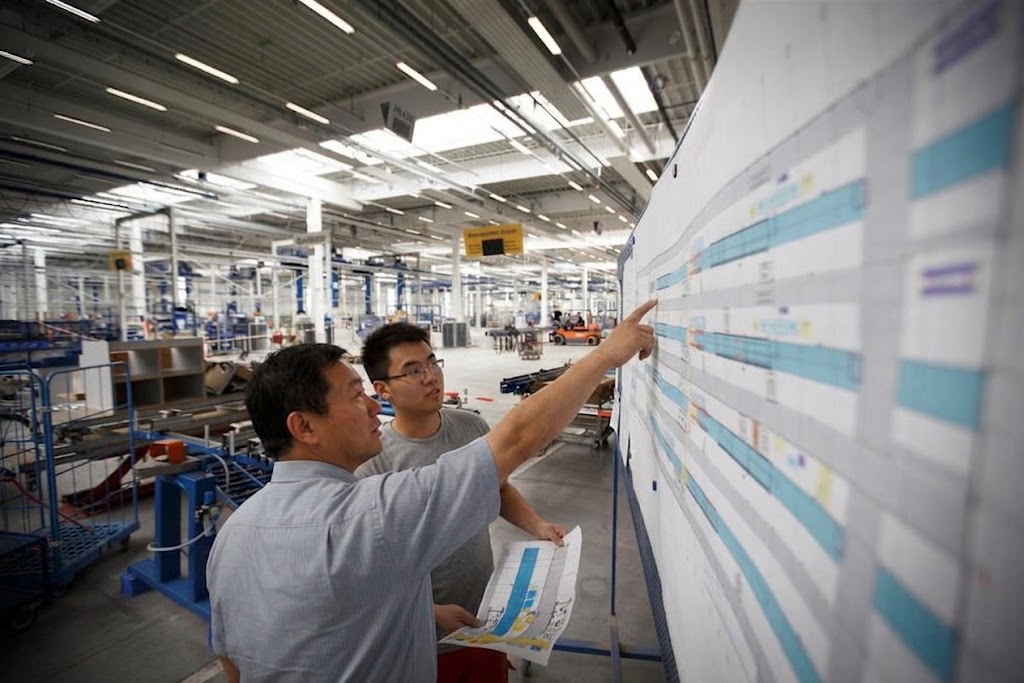
The image shows an engineer and technician reviewing factory production schedules. The site-preparation document should be a responsibility matrix with named owners, reviewed together before shipment.
Define Power at the Connection Boundary
The project should state where the line connects to plant power, who provides the upstream protection and cabling, how the route reaches the equipment, and what plant conditions need to be confirmed before energization. If the supplier gives an example voltage or connected load in a quotation, treat that as project-specific until confirmed for the final scope.
What matters here is not a generic voltage claim. It is a verified connection boundary and owner.
Define Compressed Air as an Operating Interface
Compressed air should be treated the same way. The site team should confirm:
- Where air enters the line scope
- The required air quality and stability if specified for the project
- Who provides piping, isolation, and access for maintenance
- What happens if air is temporarily unavailable during installation or startup
Air problems often appear late because teams assume "plant air exists" without validating the usable point of connection.
Check the Floor as a Working Boundary
"Floor ready" is too vague for an industrial line. The site review should confirm the installation footprint, levelness expectations where defined by the project, anchor or base requirements, embedded obstructions, nearby pits or no-pit assumptions, and the route for operators, pallets, forklifts, or maintenance access.
In at least one quoted slit-coil packing line scope, the utility note explicitly stated that no pit was required. That is a project boundary, not a universal rule. Every site-preparation article should keep that distinction clear.
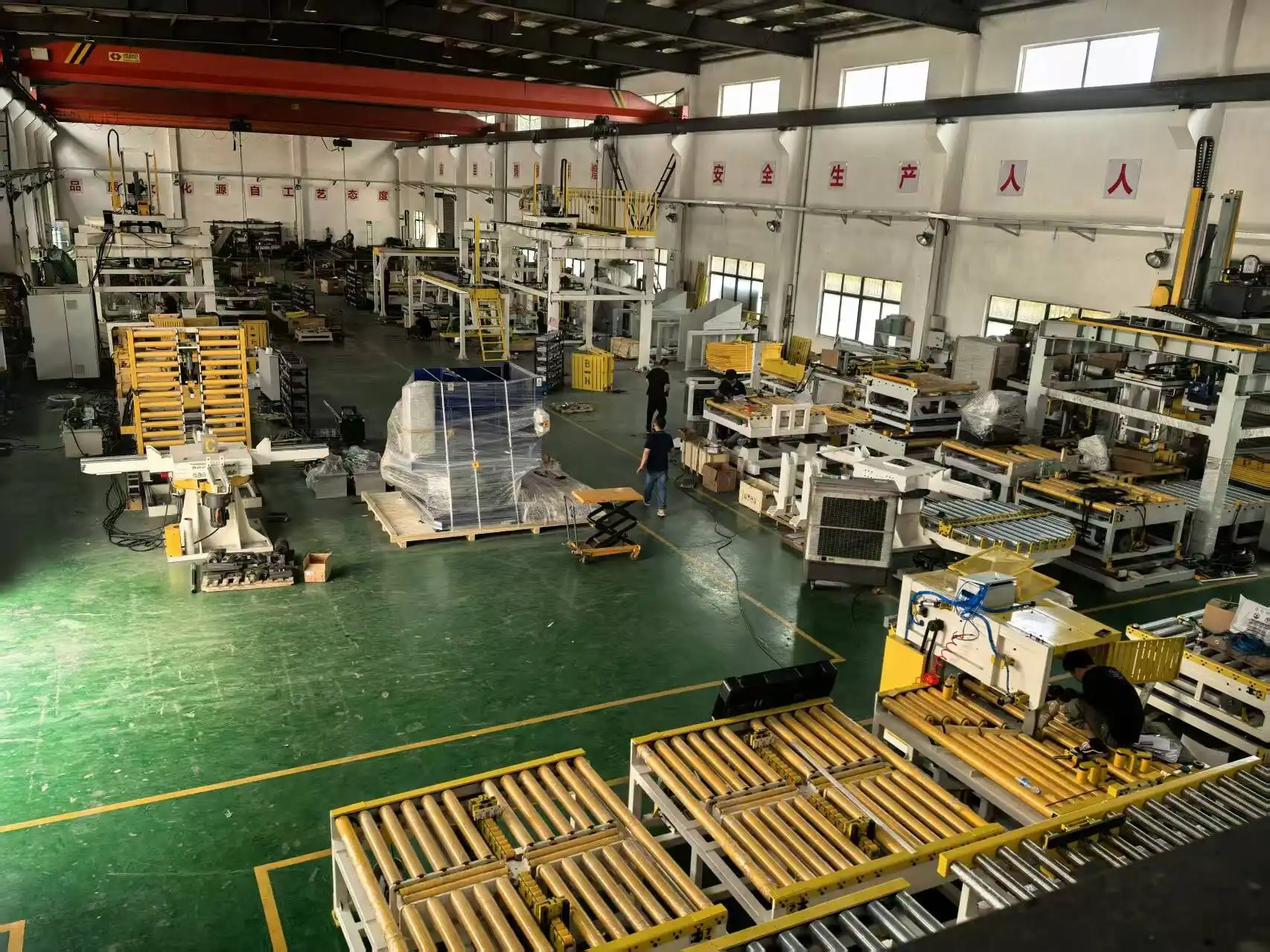
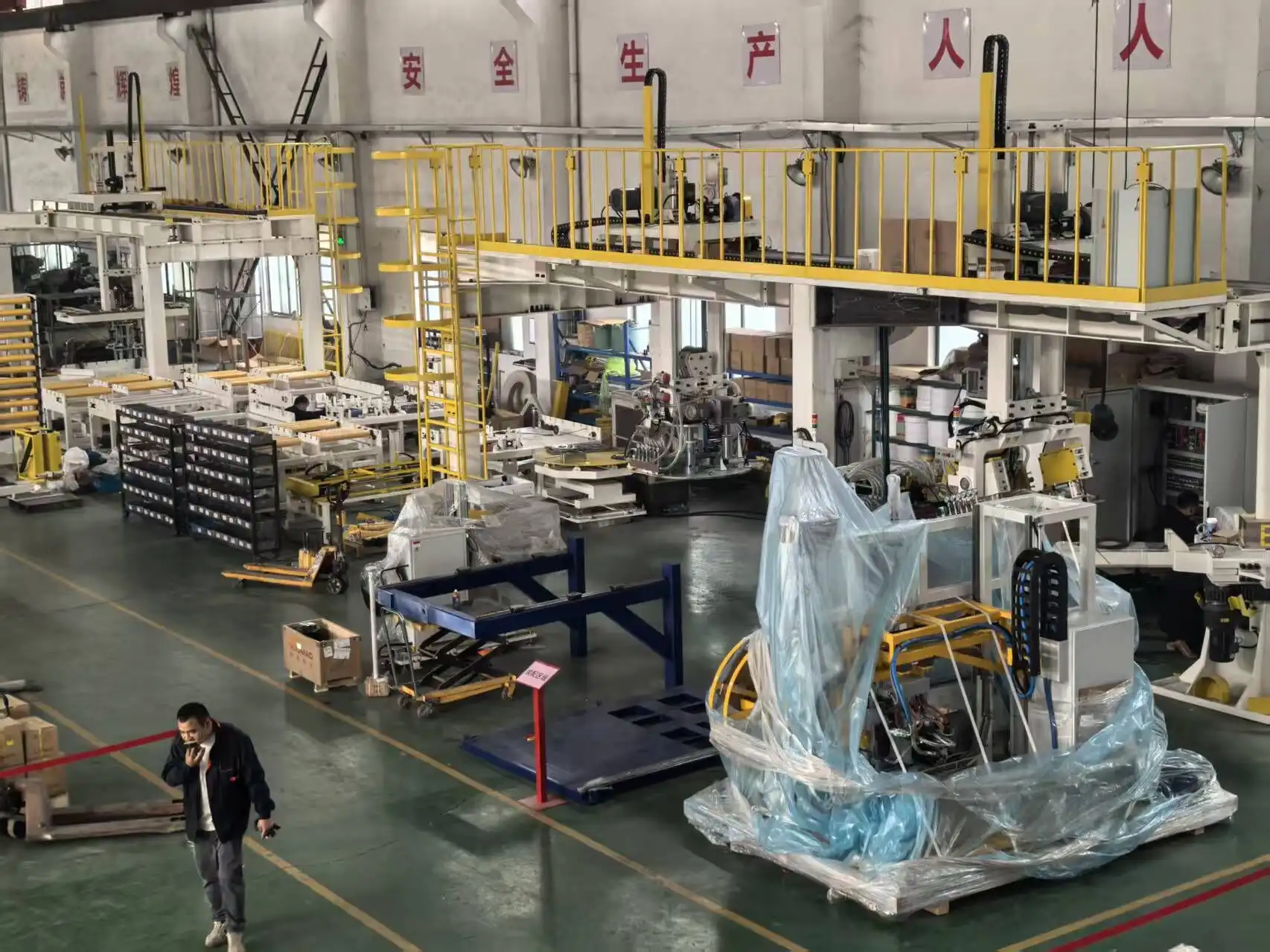
The image shows a coil packing line manufacturing factory. Floor readiness includes footprint, anchors, levelness where defined, embedded obstructions, and the routes for operators, pallets, forklifts, and maintenance access.
Review Access Before Equipment Arrives
Large equipment sections, guarding, electrical cabinets, and pallet or stack discharge areas all depend on the physical route into the installation zone. Confirm doors, lifting points, crane coverage where used, temporary storage area, and whether adjacent production must remain active during the move.
This review should happen before shipment, not after the first truck reaches the plant.
Confirm Communication and Labeling Points
Site readiness is also affected by where the line will exchange signals, labels, or order data with surrounding systems. Even if a project keeps the data scope simple, the team should define cabinet placement, cable routes, operator terminals, and who owns the connection to nearby equipment or plant systems.
These are still site interfaces. Treating them as late software details often delays practical startup.
Include the Adjacent Handoff Zones
Power, air, and floor are not enough if the neighboring systems are ignored. The site should also define how coils arrive, where finished packages leave, what buffer area exists, and how operators safely move around the line. A prepared site is one that can receive both equipment and product flow.
This is where site preparation connects directly to commissioning risk.
It also clarifies who owns temporary measures during installation, such as blocked traffic lanes, temporary staging, or manual transfer around unfinished areas. Those details are operational, but they affect whether the site is genuinely ready.

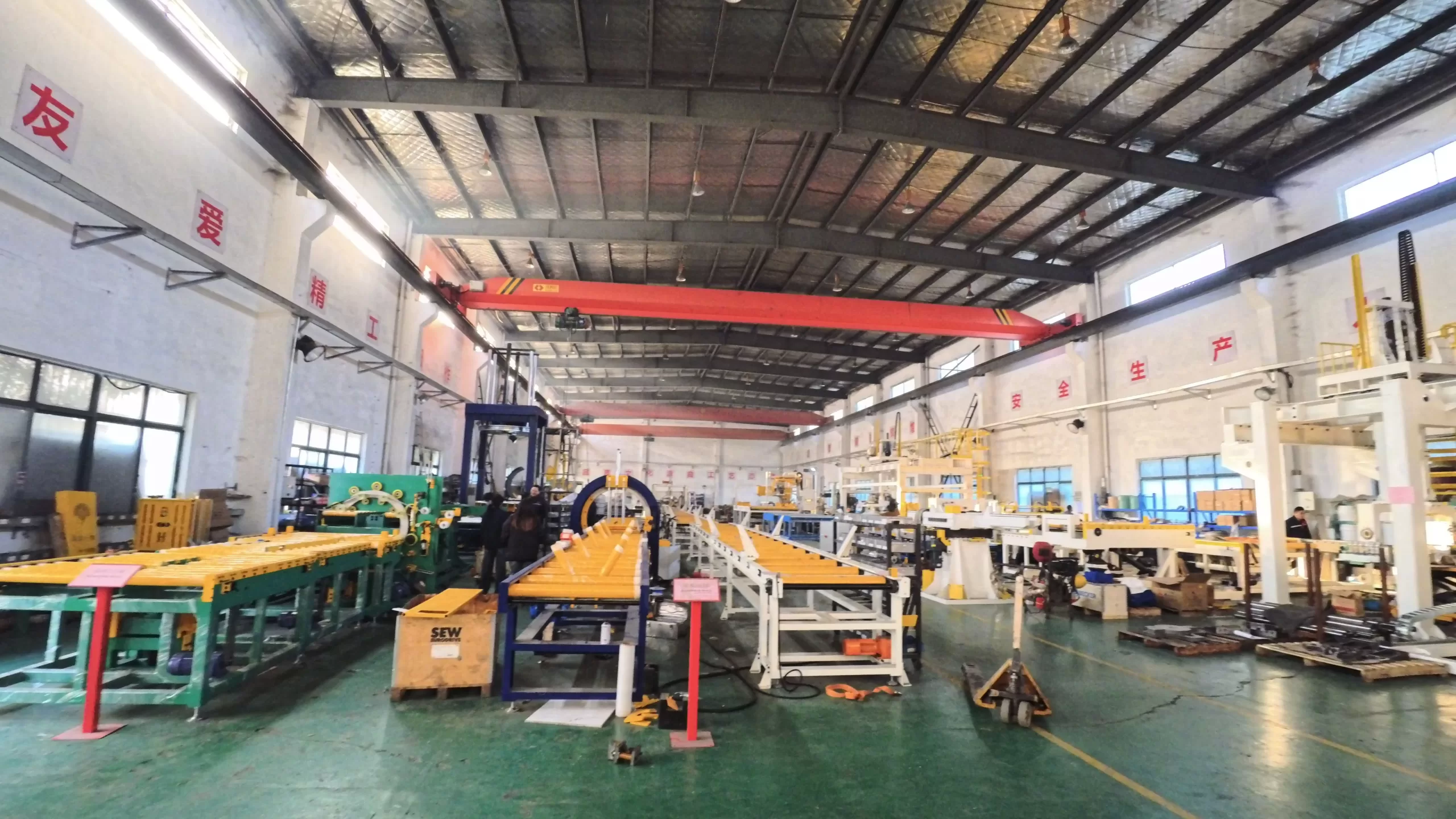
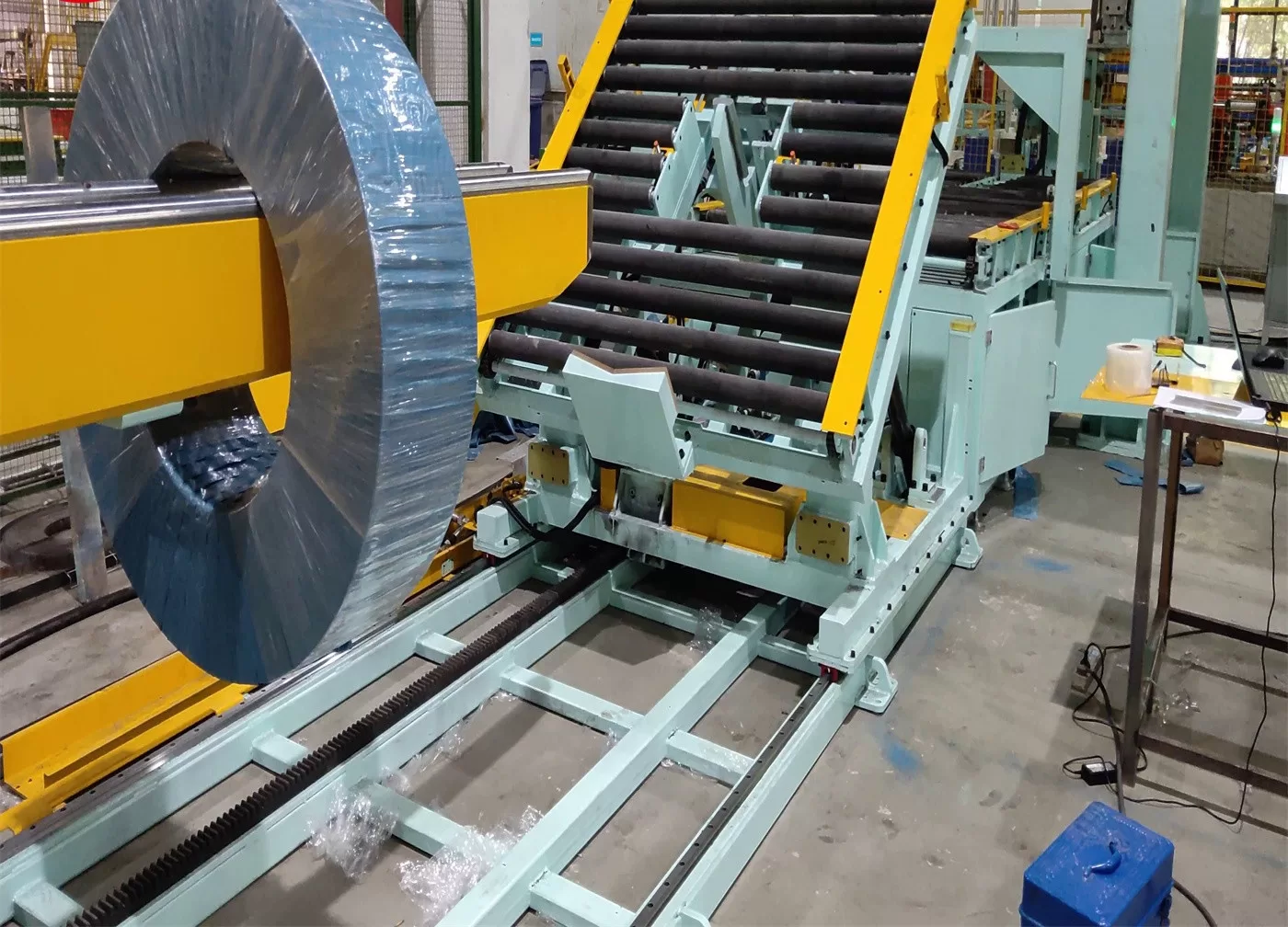
The image shows people working around a coil wrapping machine in a factory. The site must define how coils arrive, where finished packages leave, what buffer exists, and how operators move safely around the line.
Plan Cold Checks Before Hot Checks
The line should not begin live operation before the site passes basic physical checks: equipment position, anchor status, cable routing, air connection, guarding closure, access clearance, and manual intervention space. Those cold checks reduce the number of surprises once power and air are introduced.
Commissioning delays are often rooted in skipped site-preparation checks rather than in machine defects.
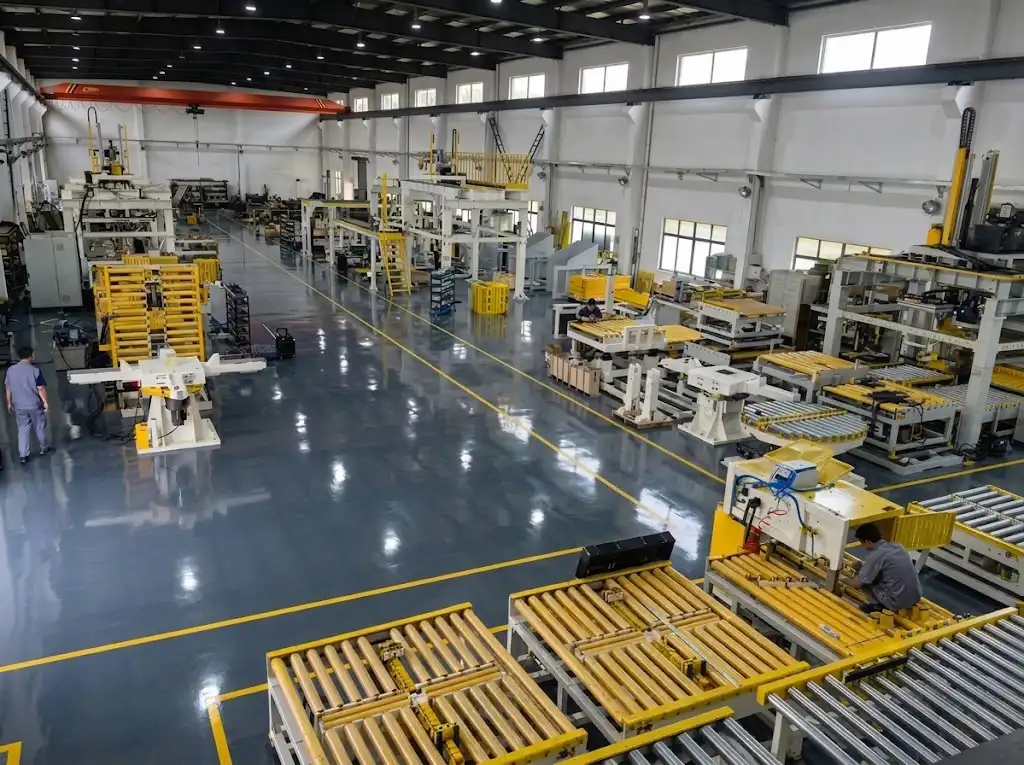
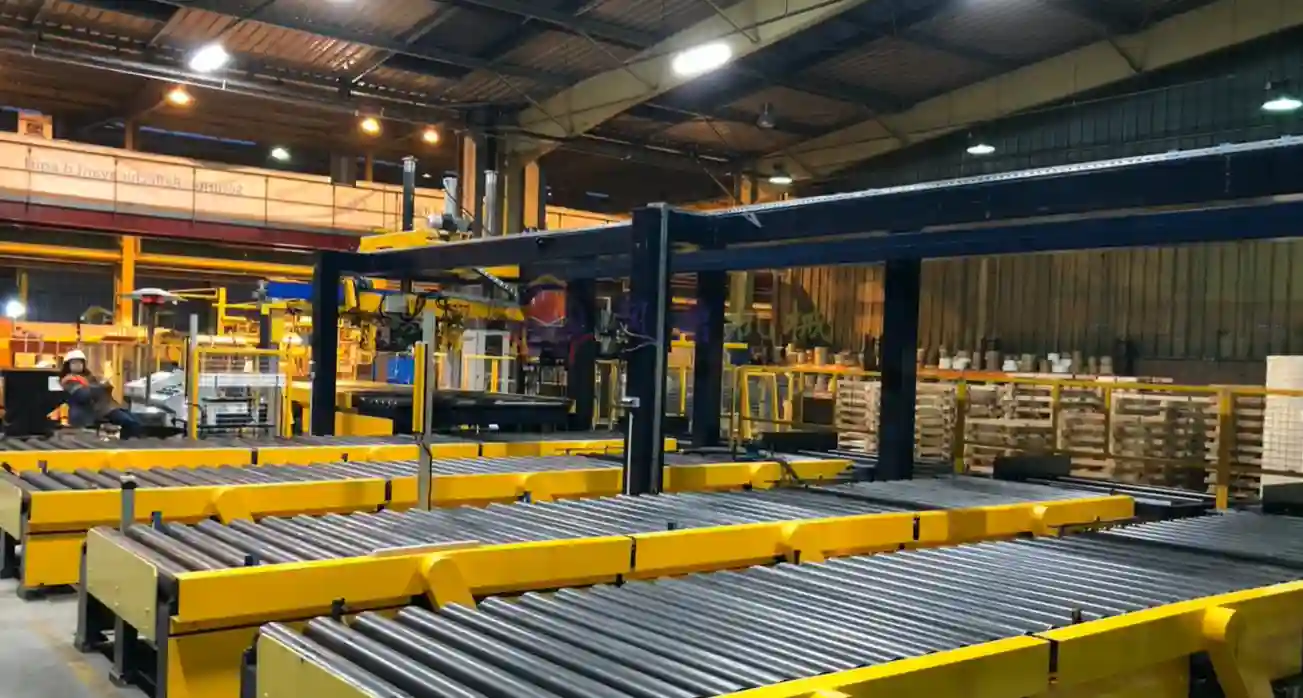
The image shows a coil packing line inside a manufacturing factory. Cold checks such as position, anchoring, cable route, air connection, guarding, and access clearance should be completed before power and air are introduced.
Watch an automatic heavy-duty steel coil strapping and stretch wrapping line:

Keep Project-Specific Numbers Inside Their Project
Quotations may include example values for power supply, air consumption, floor notes, or line dimensions. Those are useful for planning only when the team labels them correctly as scope-specific inputs. Good site-preparation content should never convert one quoted value into a universal requirement for all coil packing lines.
A Practical Next Step
Build a site-readiness checklist with four sections: power boundary, air boundary, floor and footprint, and adjacent handoff area. Add one owner and one sign-off condition to each item. Review the checklist before shipment and again before energization of the automatic coil packing line.
Visual Details

Click to enlarge
Click to enlarge
Click to enlarge
Click to enlarge
Watch How It Works
Discover how our automated packaging solutions optimize your production line efficiency. This video demonstrates the seamless operation designed for maximum protection.
Trusted by Steel Mills & Industry Leaders
Global manufacturers rely on FHOPE heavy duty packaging equipment


Ready to optimize your packaging line?
Get a custom quote with ROI analysis. Our engineers respond within 24 hours.
- Free layout design
- Global installation support
- 2-year warranty included
Your information is secure and will never be shared.
Related Machines
Steel Coil Packaging line
View Details →
Vertical coil packaging line
View Details →
Hose Coil Packaging line
View Details →
Copper Coil Packaging line
View Details →
Wire Coil Packaging line
View Details →
Panel Packaging line
View Details →
Pipe Bagging Machine
View Details →
Aluminum profile packing line
View Details →
FHOPE Automatic pipe tube bundling&strapping line
View Details →
Automatic pipe tube bundling & strapping line
View Details →
Automatic steel tube strapping machine
View Details →
FHOPE Automatic steel tube packing machine
View Details →
Automatic plastic Pipe strapping packing line
View Details →
Automatic PPR/PVC Pipe bagging line
View Details →
Platsic pipe bag packing machine
View Details →
Tyre Packing Machine FPT-200
View Details →
Tyre Packing Machine FPT-300
View Details →
Tyre Packing Machine FPT-400
View Details →
Cable Coil Packing Machine-FPCA100
View Details →